Introduction
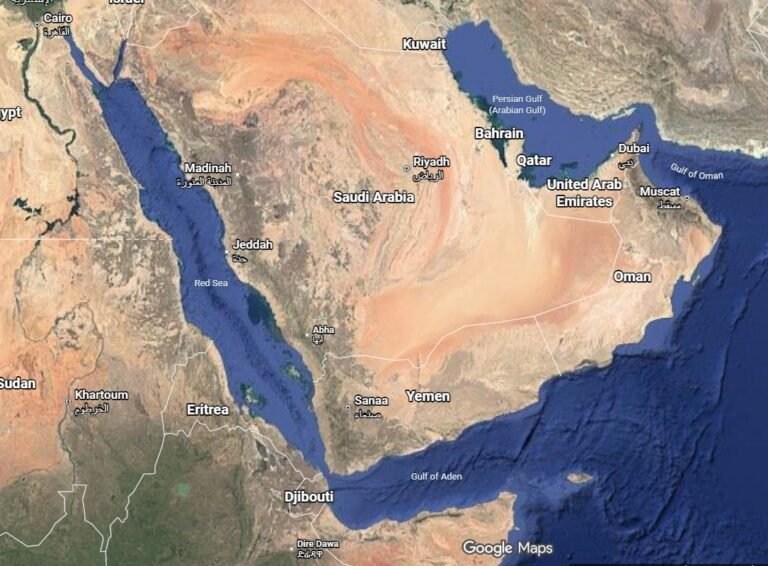
The Somali people are one of the most unique ethnic groups in Africa, with a distinctive genetic history, cultural identity, and trajectory of development over the course of thousands of years. To understand Somali ethnicity requires considering both their ancient origins, and the complex historical processes that evolved to form them as a people, distinct from others.
Genetic Heritage and the Emergence of Ethnic Identity
Ancient Foundations
The Somali people have a distinctive genetic make-up that hints at their deep history in the Horn of Africa. Current genetic studies indicate that Somalis have been living in this part of northeastern Africa for about 7,000 years, making them one of the indigenous peoples of the region. The genetic make-up of the Somali people suggests a complex ancestry, and is not directly comparable to some other African populations.
Recent genome-wide analyses reveal that the Somali population has about 60% East African ancestry and about 40% West Eurasian genetic components. This selective combination indicates ancient population movements and exchange thousands of years ago, and not recent admixture events.
Cushitic Connections
Somalis are members of the Cushitic branch of the Afroasiatic language family and are genetically related to other Cushitic peoples, such as the Afar, Oromo, Beja, Bilen, and Saho, which suggests that these groups evolved from a common ancestral stock of Cushitic peoples residing in the Horn of Africa.
The genetic analysis confirms that Somalis by far have the most genetic similarity to other populations in the Horn of Africa region rather than Arabic populations, sub-Saharan populations, or other regional populations, despite their cultural and religious ties to the wider Islamic world.
Historical Development
The Land of Punt Connection
Archaeological and historical evidence suggest that land of Punt referred to in Egyptian texts over 4,000 years ago is found in the Horn of Africa and likely included modern territory occupied by the descendants of the Somali peoples. This ancient kingdom was known for its trade in frankincense, myrrh, gold, and exotic animals with Egypt and other ancient civilizations.
Punt represents one of the first known dealings of Somali ancestors to the wider ancient world and established a trajectory of trade and cultural exchanges patterns that would evolve and characterize the region for thousands of years.
Early Islamic Period (7th-10th Centuries)
The advent of Islam to the Horn of Africa in the 7th century CE ushered in a new era in Somali history. Unlike many areas of Africa that experienced Islam through military conquest, the Somali coast experienced the one true religion through trade with Arab merchants.
This era also ushered in a new wave of Islamic settlement on the Somali coast with settlements in Zeila, Berbera, and Mogadishu forming centers of Islamic learning and trade, while connecting the Horn of Africa to the Islamic world, which still used local features.
Medieval Sultanates (10th-16th Centuries)
The medieval age saw the appearance of a few powerful Somali sultanates that exercised power over trade routes and territory in the Horn of Africa:
The Sultanate of Adal (13th-16th centuries) was perhaps the most powerful, ruling over most of the present-day Somalia, Eastern Ethiopia, Eritrea, and Djibouti to become perhaps the regional power of the time under leaders like Ahmad ibn Ibrahim al-Ghazi (Ahmad Gurey) emerging to rival the Ethiopian’s.
The Sultanate of Mogadishu was an emerging trading power who minted its coinage and trade agreements with China, Persia, and other far-off lands. The city also developed recognizably non-Islamic architecture and developed a reputation as a leading center of Islamic Scholarship
The Ajuran Sultanate (13th-17th centuries) dominated southern Somalia and was distinguished for its exceptional hydraulic engineering, and innovation in developing complex irrigation systems, that enabled agricultural activity in an arid landscape.
The Age of City-States and Trade (16th-19th centuries)
After the decline of the larger sultanates, Somali society was organized on the basis of city-states and clan confederations. By this time, there were:
Comprehensive shipping, maritime trade routes connecting the Somali coast with India, Persia, Arabia, and East Asia
An enormously developed oral literary tradition
Islamic centers of learning and Sufi orders
Gradual expansions of Somali pastoralists into new areas
Colonial Era and Partitioning of Somali Territories (Late 19th-Mid 20th century)
The late 19th century was an era of British colonialism and conquest in Somali territories and the birth of multiple colonial entities divided among:
British Somaliland in the north
Italian Somaliland in the south and center
French Somaliland (later Djibouti) in the northwest
Ethiopian imperial rule over the Ogaden region
British rule of the Northern Frontier District in Kenya
This territorial partitioning had major consequences for Somali territory, social formations, and agriculture while supplying administrative structure and technology.
Modern Era and Nation-Building (1960-Present)
The modern Somali Republic was formed with the independence and unification of British and Italian Somaliland in 1960. This period has seen attempts to create a unified Somali nation-state, territorial conflicts with Somalis in nearby countries, and internal issues related to clan politics and governance.
Cultural and Linguistic Distinctiveness
Language and Literature
The Somali language is one of the most distinctive aspects of Somali identity. As a Cushitic language with its own structures and vocabulary, Somali is a unifying characteristic of the diverse Somali clans and regions. The oral forms of the language consist of a rich tradition of poetry, folktales, and histories, allowing the preservation of Somali culture and identity for generations.
Social Organization
Traditional Somali society is organized around a complex clan system that is , at its most basic, patrilineal. This clan structure is referred to as “tol,” it provides a sense of social identity, it provides mutually supporting clan networks, and a mode of governance. The major clan families in Somalia are the Darod, Hawiye, and Isaaq, as well as the Dir, among others, each having many sub-clans and family lineages.
Pastoral Economy and Culture
The vast majority of Somalis historically lived the nomadic pastoralist lifestyle, herding camels, cattle, sheep and goats through the arid and semi-arid regions of the Horn of Africa. To this lifestyle, Somalis adapted unique cultural practices, social values, and survival strategies to their challenging environment.
Religious and Cultural Identity
Islamic Civilization
Islam has been central to the Somali identity for over one thousand years, though Somali Islamic practices have their unique characteristics that show a blending of Islamic rules and conventions with local customs. Sufi orders have played a significant role in Somali Islamic life, including Qadiriyya and Ahmadiyya.
Architectural Heritage
Somali Islamic architectural styles borrowed from Arab, Persian and local influences to develop unique forms. Distinctive coral stone mosques and tombs can be found throughout Somali territories that constitute a sophisticated architectural style with local materials adapted to climate.
Genetic Distinctiveness in Perspective
While all human populations share a common ancestry, the Somali population has a distinct genetic profile, which reflects its unique evolutionary and historical path. Its genetic distinctiveness comes from:
Geographic Isolation: The Horn of Africa’s location relative to Africa, Arabia, and the Indian Ocean afforded the opportunity to mix and have some unique combinations while remaining isolated from other large population centers.
Long-Standing Ancestry: The time depth of the Somali presence in the Horn of Africa has allowed for unique genetic characteristics to develop through genetic drift and adaptation to local environments, retained as distinct traits.
Limited Admixture: While there were many trade relationships, genetic studies offer evidence that limited large-scale mixing of Somali genetic material with other groups occurred, enabling distinct genetic signatures to persist.
Adaptation: Thousands of years of adaptation to the unique environmental challenges of the Horn of Africa may have selected for particular genetic variants.
Present Considerations
Understanding Somali genetic and cultural uniqueness has value for:
Medical Research: Distinctive genetics means that medical research originally developed for other populations may be less effective for Somalis.
Cultural Preservation: Acknowledging the uniqueness of Somali culture may contribute to preserving and revitalizing oral history and traditional practices.
Historical Context: Understanding Somali distinctiveness helps to better appreciate human diversity and patterns of migration.
Conclusion
The Somali people portray an extraordinary instance of the interplay of geography, history, and culture to create distinct human communities. Their unique genomic heritage, representing thousands of years of evolution on the Horn of Africa, aligns with a strong cultural and historical tradition, yielding distinctive peoples that are really distinctive among world peoples.
This distinctiveness should not be viewed as isolation from humanity, but rather as one of the many lovely manifestations of human diversity that enrich our species. The Somali experience reveals how a unique human community emerged from particular historical and environmental contingencies while the essential connections that unite all human beings continued to persist.
The study of and awareness of distinctiveness is not just a matter of academic interest, but an acknowledgment that human diversity is valuable and a reminder to comprehend and appreciate the contribution of all peoples to our collective human experience.
About the Author