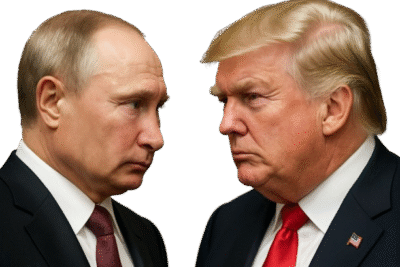
When it comes to global politics, there may not be anyone more discussed than Vladimir Putin and Donald Trump. Both individuals have shaped history in their own way but have different backgrounds, styles, and mindsets. Below is a comparison between the two, in terms of education, discipline, speech, and intelligence – and a psychological profile of their motivations.
1. Education
Vladimir Putin graduated in law from Leningrad State University in 1975, and he received follow-up training at the KGB’s Red Banner Institute. His development and learning were highly structured and focused on statecraft, intelligence, and foreign languages (he speaks German fluently and somewhat English).
Donald Trump began at Fordham University and graduated in 1976 with a degree in economics from the Wharton School of the University of Pennsylvania. His path was based on business-focused education with a focus on real estate and finance and had early exposure to the family business.
Winner: Putin dominates in state and strategic training; however, it is Trump in elite business education.
2. Discipline
Putin’s KGB past instilled in him a regimented style – physically through martial arts (judo, sambo) and mentally through intelligence operations. He is stable and consistent – rarely deviating from the structure he plays as a actor.
Trump’s discipline is different – high energy, omnipresent at public events, and working long hours. However, his form of discipline allows for more flexibility and reaction, as opposed to regiment.
Verdict: Putin is superior in sustained structured discipline and gets in the zone; Trump is superior in quickly reacting to situations.
3. Speech
Putin’s speech is always calculated and intentional, with language weighted with legal or historical meaning, and by way of oral tradition. Even when he employs emotional appeals, he weaves them into a formal content base. He speaks in a measured tone and rarely theatre, unlike sorority speak. His demeanor signals authority and diplomacy.
Trump’s speech is more emotional, repetitive, and slogan-based than characteristic to energize and mobilize a crowd. Trump is improvisational and returns to previous topics or issues depending on audience reaction.
Verdict: Putin is exceptional at formal strategic communication and Trump is unrivaled in a rally style persuasive communication.
4. Intelligence
Putin’s intelligence lies in understanding how the geopolitical chess board works, how to negotiate, and how to use multi-year time frames for influence. When you look at Putin’s career, he is clearly extremely competent as a player of the long-term game in a political system where cooperation and group politics enable him to build power and effectively monopolize power.
Trump’s intelligence lies in understanding media, branding, and consummating deals in business. He is adept at using the media as a means to gain momentum, he is great at manipulation based culturally – i.e., his audiences and followers.
Verdict: Putin is a geopolitical chess player, and trump a media warfighter.
Psychological Profiles
Putin: introverted, cold, strategy, cautious, INTJ-like. He is patient and methodical, and prefers to out-maneuver his adversaries over the long game.
Trump: extroverted, bright, active, and resilient – ESTP-like. His psychological style includes using momentum, fluidity of decision making, and engaging with the great audience of American politics.
Strengths and Weaknesses at a Glance
| Trait | Putin – Strengths | Putin – Weaknesses | Trump – Strengths | Trump – Weaknesses |
| Planning | Long-term vision | Can be rigid | Acts fast | Can be impulsive |
| Communication | Precise, strategic | Can seem cold | Charismatic | Can be imprecise |
| Risk Handling | Calculated moves | Sometimes cautious | Bold approach | May ignore risks |
| Adaptability | Strategic shifts | Limited flexibility | Highly adaptable | Inconsistent style |
About the Author