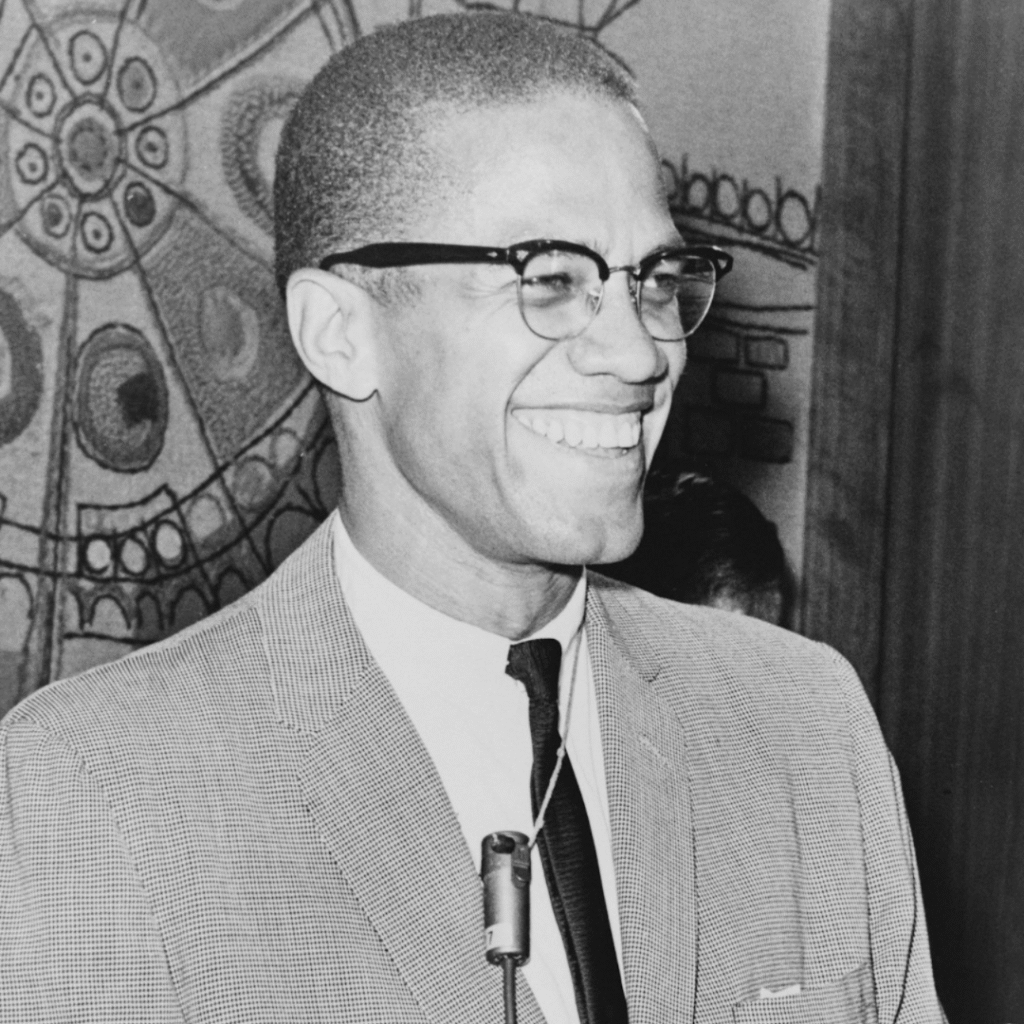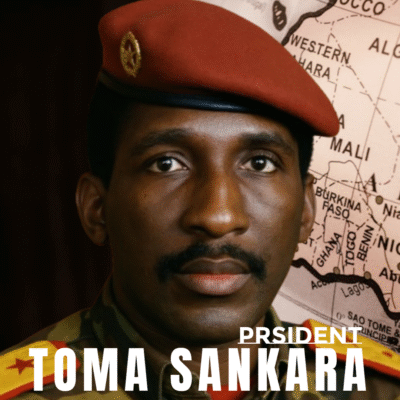
Thomas Isidore Noël Sankara (21 December 1949 – 15 October 1987) was a revolutionary leader and Pan-Africanist who was the President of Burkina Faso (formerly known as Upper Volta) from 1983 to 1987 before he was assassinated. Sankara was a charismatic leader who built loyalty with integrity. He introduced radical socialist policies and sometimes is dubbed “Africa’s Che Guevara.”
Sankara took power in Burkina Faso in a popular coup in 1983 at the age of 33 and renamed the country from Upper Volta to Burkina Faso which means “Land of Upright People.” His government focused on:
Anti-corruption campaigns
Land reform and self-sufficiency in food
Vaccination and health programs
Education and women’s emancipation (he prohibited forced marriage and female genital mutilation)
Environmental protection (he started a national reforestation program)
Sankara refused foreign aid he viewed as neo-colonialism and urged African countries to unite and refuse to pay foreign debt, which he called a new form of colonialism.
Sankara was assassinated due to both internal and external reasons:
Internal Opposition: His radical policies garnered powerful domestic elites, including tribal chiefs, business people, and some military leaders, who feared Sankara’s anti-corruption ethos, land reforms, and rejection of privilege.
External Pressure: Sankara openly defied Western colonialism (especially France) and asked Africa to reject debt payments that benefitted foreign governments and multinational corporations with investments in neo-colonial structures in Africa.
Geopolitical Isolation: he did not align himself with either side of the Cold War, leaving himself geopolitically isolated.
While there has been no official investigation or public admittance of France’s direct involvement, there is substantial evidence and general consensus that France, the former colonial power, was complicit and/or aware of the conspiracy to eliminate Sankara. France maintained a neo-colonial philosophy, encompassing the policy of “Françafrique”, which aimed to maintain influence in former African colonies through loyal regimes.
Also:
It is reported that Ivory Coast’s president Félix Houphouët-Boigny, who was a sympathetic ally to the French, supported the coup.
The CIA’s involvement has been speculated because of Sankara’s Marxist orientation, although there is never any definitive proof about its involvement.
Legacy
Sankara, despite being assassinated, continues to be a legend in Africa and worldwide as a representation of anti-imperialism, political integrity, and visionary leadership. There remains much to learn from his vision that continues to inspire youth movements attempting to advocate for African sovereignty, environmentalism, and social justice.
About the Author